
Global Mobility Manager,
Coca-Cola Europacific Partners (CCEP)
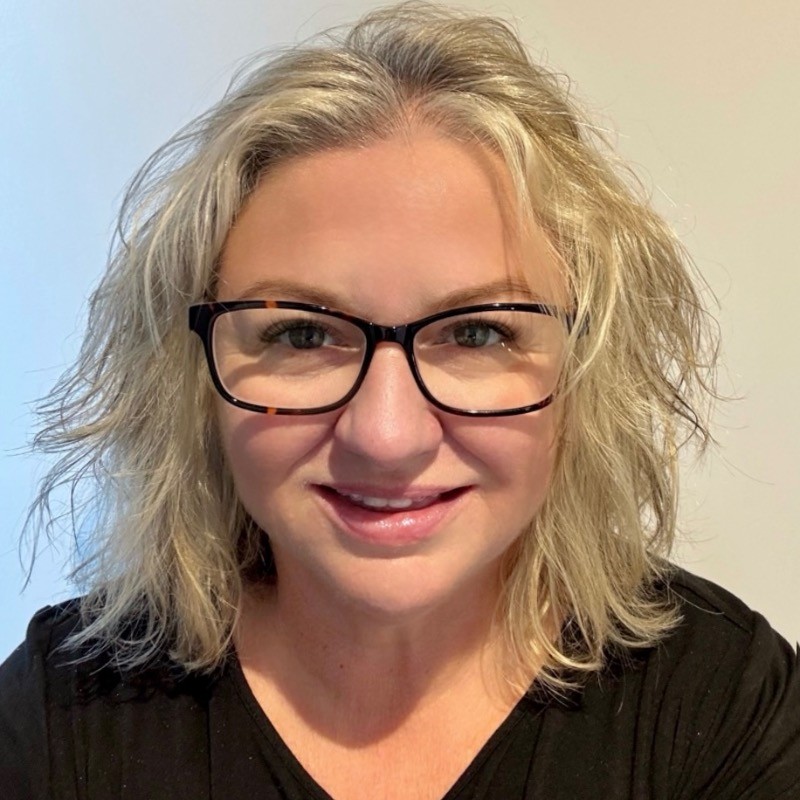
Global Mobility Project Manager,
RMIT University

Head of Global Mobility,
North Asia and South East Asia &
Australia and New Zealand, Chanel
Macro trends are fundamentally reshaping mobility. Increasing geopolitical tensions and talent shortages, coupled with rapidly evolving technology and AI, are forcing organizations to reevaluate their mobility strategies.
The Vialto Mobility Matters Survey1 showed persistent skill gaps across several industries and markets. But stakeholders also expect mobility to serve broader strategic goals. As a result, mobility is increasingly being used not just to move people, but to shift capability. However, rising costs remain a central concern in many markets for organizations and employees alike, making it more important than ever to justify mobility decisions.
Speed and autonomy are in high demand, with business leaders demanding faster decisions and fewer barriers when looking to move talent. At the same time, employees expect greater choice and flexibility in the type of mobility support they receive, which adds additional complications.
There is also a need for stronger alignment with corporate values. This includes reinforcing duty of care, ensuring support for employee well-being, and integrating sustainability into mobility policies. Mobility is increasingly expected to reflect an organization’s brand, culture, and purpose—not simply serve as a function that moves employees from one location to another.
The growing compliance complexity associated with tax, immigration, and regulatory requirements is also becoming harder to navigate—and there’s a corresponding rise in audit activity, which is placing a premium on robust governance.
Against this backdrop, leading organizations such as Chanel, Coca-Cola Europacific Partners (CCEP), and RMIT University are taking distinct approaches to evolving their mobility programs—balancing business priorities, employee experience, and operational realities across diverse markets.
Insights in this article draw on perspectives from mobility leaders Fiona Hyland (CCEP), Roy Fu (Chanel), and Leanne Mills (RMIT University), alongside Vialto’s Selina Keller, to explore how mobility leaders across APAC are translating strategy into practice.
Putting priorities into practice
Across APAC, global mobility leaders are taking different approaches to embedding their priorities into practice, shaped by their organizational context, workforce needs, and operating environments. While their starting points and challenges vary, a common thread is the shift toward more deliberate, structured mobility transformation.
Their approaches reflect the specific constraints and priorities they are navigating:
Fiona Hyland, Global Mobility Manager at Coca-Cola Europacific Partners (CCEP), recently led a major initiative to strengthen cross-region mobility between operations located at opposite ends of the globe.
For Roy Fu, Head of Global Mobility, North Asia and South East Asia & Australia and New Zealand at Chanel, the challenge is less about geography and more about delivering consistent, high-quality employee experiences across a workforce that is 80% female.
Leanne Mills, Global Mobility Project Manager at RMIT University, is over a year into a program focused on consolidating academic mobility across several APAC countries. Her primary constraint is not distance, but time.
Consistency is key
Cost is a common mobility driver, but it’s not always the first. According to Hyland, a pronounced northern/southern hemisphere divide in CCEP’s operations made ensuring consistency and fairness in the assignee experience the top priority.
The first step was gauging the perspectives of assignees, business partners, and leaders in each region. Assignees were most concerned about practical support, such as childcare and housing, while business partners emphasized talent management. For CCEP leaders, the priority was balancing support, workforce planning, and cost.
“Internal benchmarking showed what was already in place, and external benchmarking told us how competitive we were in terms of mobility. That process set out the priorities, which were then written into our mobility policy,” said Hyland.
At Chanel, their initial transformation was focused on consistency. However, the ultimate goal was to change the corporate perception of mobility from an operational activity to a strategic tool. That meant developing a more comprehensive mobility suite based on Core-Flex Mobility Models—balancing a consistent global framework with the flexibility to adapt and support by role, location, and employee needs.
“Expanding into new luxury goods markets isn’t easy. It can be hard to get local talent in niche spaces like high-end jewelry,” says Fu. Core-Flex enables Chanel to explore mobility options for employees at less senior levels to meet business needs, support the professional development of staff, and improve retention. “We use persona-based scenarios to put employees at the center of mobility and ask, “What will it take to help them hit the ground running?” That’s what our policies are based on,” he explained.
In higher education, mobility is closely linked to university semesters, teaching schedules, and research grant cycles. RMIT’s mobility transformation is focused on automating outdated, spreadsheet-based processes to allow researchers with funding and grants from other countries to move as seamlessly and quickly as possible.
“Cost was not really the main priority. It’s more about schedules and dealing with compliance and risk,” said Mills.
Global consistency, local complexity: Limits of a one-size-fits-all approach
Because every location is slightly different, building a global, one-size-fits-all solution is almost impossible. For example, in Europe and the UK, cash is king, and allowances that can be converted into cash are popular. People can keep it, spend it, or use it for shipping.
However, as CCEP’s Hyland pointed out, APAC locations like Indonesia, Fiji, Papua New Guinea, and the Philippines have different rules and payment practices. “In Indonesia, you have to sign a corporate lease for a year and provide the entire rent to the owner upfront. That rules out providing convertible cash allowances,” she said.
CCEP has opted for a flexible approach that accommodates regional differences, while maintaining a coherent global policy.
Chanel tried to resolve these issues by, among other measures, putting a value cap on household goods shipments. However, this created new challenges. Some employees who owned numerous luxury items (common among employees) immediately exceeded the cap—delaying relocations in practice. Chanel ultimately scrapped the cap and added new guidelines on supported items.
Now the company relies on Core-Flex to identify differences, review requirements, and manage policy changes. “It’s been an interesting journey. We were glad that we had a platform to help us track all of that centrally,” said Fu.
Lessons learned
Mobility management is a juggling act, with professionals required to constantly balance operational agility with strategic impact, compliance with care, and costs with delivering value to the organization. While these approaches have delivered strong outcomes, they have also yielded several important lessons.
Regardless of the approach, Mills from RMIT advises budgeting more than you think is needed. She also recommends looking for additional skill sets. “They’re not the first thing you think of when hiring people for mobility, but finding people with extended skill sets outside of tax, immigration, compliance, and risk management certainly makes a massive difference,” said Mills.
Fiona Hyland at CCEP believes that anyone planning a policy transformation should budget more time. “It takes a lot of time for every single country to really consider what is unique to those locations. Also, leave time to socialize those policies across the business because you’ll receive a lot of questions,” said Hyland.
Chanel’s Roy Fu has been involved in several transformation programs in recent years. In his opinion, mobility specialists can be guilty of oversharing theory and technicalities when rolling out a program—creating unnecessary complexity for business and assignees. His advice is to focus on clarity and outcomes.
“The business and the general employee population don’t need to know any of the deep- dive details. If you really are a trusted advisor, just keep it simple and deliver the results,” said Fu.
From policy management to strategic enablement
While every organization’s mobility journey is different, the experiences of CCEP, Chanel, and RMIT highlight a common theme: mobility is increasingly expected to deliver more than operational execution. Whether the priority is workforce planning, employee experience, compliance, cost management, or talent development, mobility functions are being asked to support broader business objectives.
As organizations navigate growing complexity, successful mobility programs will be those that balance global consistency with local flexibility, while remaining closely aligned to business strategy.
The approaches may differ, but the direction is clear: mobility is becoming a more deliberate, strategic capability that helps organizations access talent, build capability, and support growth in an increasingly interconnected world.
Contact us
For a deeper discussion on the above, please reach out to your Vialto point of contact, or the expert below:
Selina Keller
Partner and APAC Workforce Transformation Leader
Sources
Vialto Partners (“Vialto”) refers to wholly owned subsidiaries of CD&R Galaxy UK OpCo Limited as well as the other members of the Vialto Partners global network. The information contained in this document is for general guidance on matters of interest only. Vialto is not responsible for any errors or omissions, or for the results obtained from the use of this information. All information is provided “as is,” with no guarantee of completeness, accuracy, timeliness, or of the results obtained from the use of this information, and without warranty of any kind, express or implied, including, but not limited to warranties of performance, merchantability, and fitness for a particular purpose. In no event will Vialto, its related entities, or the agents or employees thereof be liable to you or anyone else for any decision made or action taken in reliance on the information in this document or for any consequential, special or similar damages, even if advised of the possibility of such damages.
© 2026 Vialto Partners. All Rights Reserved.
Let's connect
Please reach out if you’d like to learn more about Vialto.