
Associate Director, Global Mobility, Agoda

Senior Global Mobility Specialist, Telstra
International remote work boomed during COVID-19 and is now an increasingly accepted way of working. The rise in remote work reflects a continued increase in popularity of other informal mobility types such as business travel, commuter arrangements, and virtual assignments as organizations reassess the more traditional long- and short-term assignments.1
In some countries, employers are trying to encourage or require staff to be on-site for more of their time. For example, in Singapore, many organizations are now mandating five days a week back in the office. This decline in hybrid working arrangements is being countered by a continued offering of remote work.
More generally, the organizations that previously offered remote work are continuing to do so. In fact, international remote work has become a widely adopted part of the employee value proposition. This has prompted companies that didn’t have a formal policy to create one or to review their existing arrangements.
A common international remote-work model is a short-term arrangement. It typically involves an employee working away from the office, in a different state or country, for a specified period—usually for a few weeks, but sometimes longer depending on the organization’s policy. It is often combined with vacation or visiting family.
In this article, mobility leaders Lucy Taylor of Agoda and Rachel Daly of Telstra, along with Vialto’s Ben Neumann, share their best practices for remote work and short-term international work and reflect on how mobility leaders across APAC are operationalizing their strategies.
Short and sweet is proving popular
“The key point is that it’s an increasing trend for employees to want an overseas or remote work experience as opposed to their being a specific business need,” said Ben Neumann, Vialto’s Remote Work Leader for APAC. “Accordingly, an increasing number of companies are happy to allow people to work from anywhere, provided it doesn’t create significant risk or additional cost for the business, usually ensured through a well-thought-out and considered policy framework.”
According to Neumann, the right to work is a “non-negotiable” requirement. “Typically, this involves setting up policy guardrails to limit risks and manage potential compliance costs,” he said. Other considerations include how long an employee is permitted to work outside of their country of employment.
While the global average is 29 days per calendar year, Agoda, a Singapore-headquartered online travel agency, currently allows employees to take up to 30 days.
“Remote work is a huge part of what we do, and we receive nearly 4,000 remote work requests a year,” said Lucy Taylor, Agoda’s Associate Director, Global Mobility. “Interestingly, despite people asking for longer periods of stay, the average Agodan only takes 14 days of remote work.”
Companies also put certain countries on a prohibited list for a variety of reasons, including cybersecurity and geopolitical risks. Given the fluid nature of geopolitics, these lists must be reviewed and revised on a relatively frequent basis.
According to Neumann, creating a remote work policy that fits the organization and can be managed efficiently remains a challenge. While there isn’t a one-size-fits-all solution, there are certainly best practices that can smooth and expedite matters and produce something effective and sustainable.
Remote work in practice: Balancing flexibility and control
Agoda rolled out its remote work program in 2022 as a family reunification initiative designed to help expatriate employees—who represent about half of its workforce—maintain ties with family and friends. The program has since evolved and grown.
“Now it’s seen as part of our ethos and the company’s vision to bridge the world through travel,” said Taylor.
Australia’s largest telecommunications company, Telstra, recently embarked on a review of its remote work policy. According to Senior Global Mobility Specialist Rachel Daly, the goal is to balance flexibility with compliance and its associated risks as part of Telstra’s new organizational strategy.
“We wanted to make sure we’re very clear on what the policy looks like, how it is applied, and how we’re going to keep track,” said Daly. “Keeping compliance and checks in place, but at the same time providing the benefits that remote working offers.”
Moving up the mobility curve
Mobility is increasingly seen as a strategic lever to attract, retain, and develop future talent. However, many organizations are flipping the model on its head. Rather than moving people to the work, they are looking at how they may be able to move the work to the people.
Some organizations don’t permit any international remote work. This doesn’t mean those businesses are at the less-developed end of the mobility curve (see Diagram 1); rather, it may be a well-considered position that aligns with their strategy, what their competitors are doing, and the risks or challenges specific to their industry.
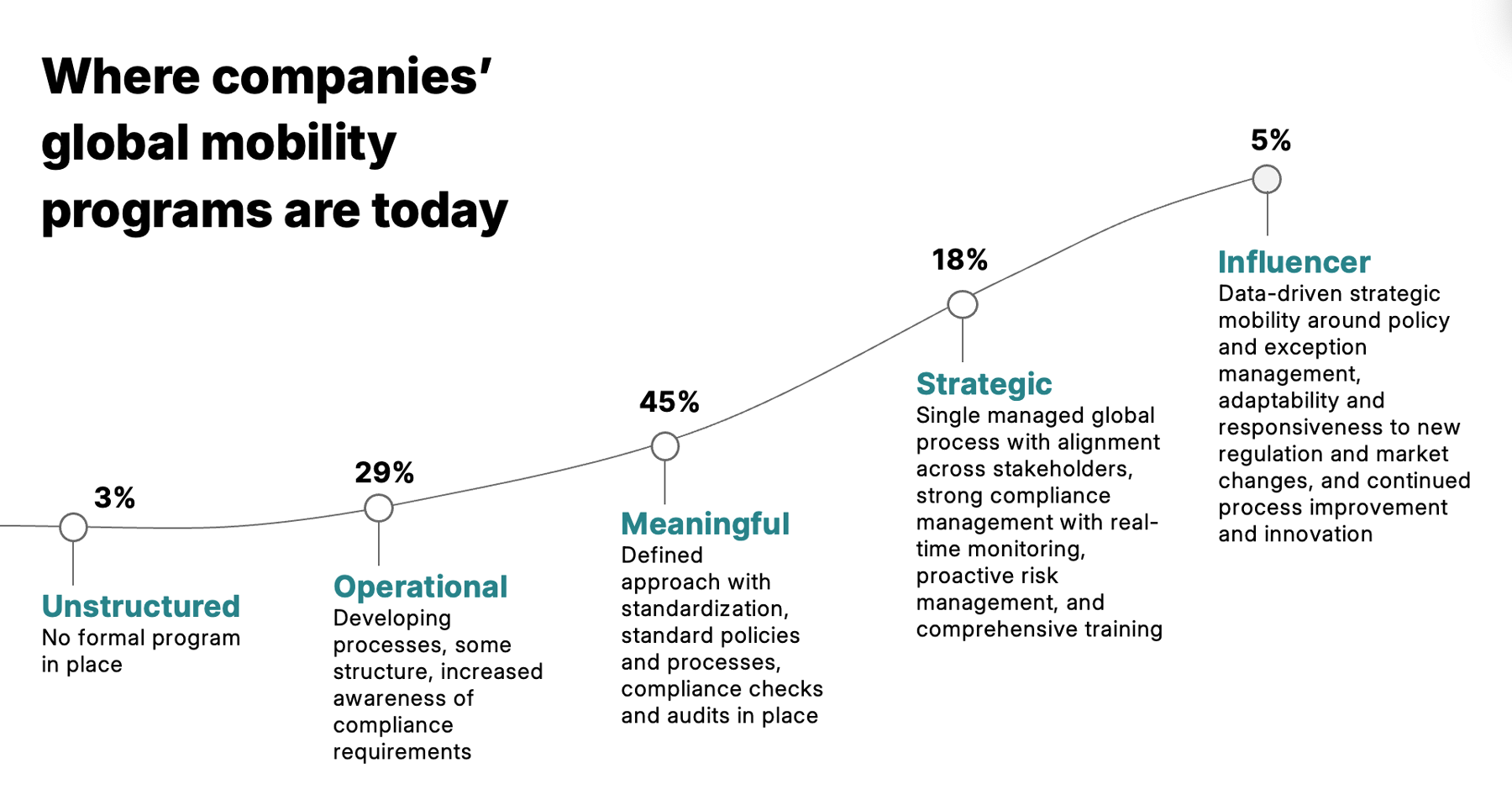
Diagram 1: Where companies’ global mobility programs are today
Source: Mobility Matters survey, Vialto (2025)
Telstra has been looking at its mobility program since 2010 and has progressed through several stages of the mobility evolution curve. Daly believes Telstra is now at the “Strategic” stage, where most respondents (57%) in Vialto’s Mobility Agility survey identify retaining talent as a primary driver for enabling short-term international remote work2.
“Right now, we’re putting a lot more clear, decisive policy requirements in place, and looking at assessment tools to assist the process,” Daly said. “In a world where there’s constant change in rules and regulations, it’s good to have that strong process to enable mobility.”
Measuring success
How does a business determine if its remote work strategy is effective? Or if it requires a review, modification, or a complete overhaul? As in most situations, the best place to start is by asking the right questions about:
Resourcing
- Are you spending too much time on remote work cases?
- Is there a high volume of exceptions to review?
- Should technology and automation be considered?
Risk and governance
- Where are your people? Are there geopolitical risks?
- Have there been any internal or external audits?
- Are internal teams equipped to review compliance risks?
Operational inefficiencies
- Is there clarity on volumes?
- Is there clarity on ownership and governance?
- Are there any inconsistencies in the approach?
Employee relations
- Are employee expectations defined?
- Does the approach support the value proposition and employee demands?
- Are there any difficulties in talent attraction or staff retention?
Cost-effectiveness
- Are vendor or time costs high, but impact is low—i.e., with reference to the take-up rate and / or the impact on the team and employee value proposition?
If the answer to any of these questions is “yes,” there is a good chance that the remote work policy needs some work.
Telstra focused its most recent policy review on compliance and unearthed some anomalies. In certain cases, individuals believed they were entitled to work remotely but were proven wrong when they were unable to produce the required documents.
The telecommunications and technology company also looked at its lists. While it had a comprehensive list of no-go zones—countries where employees were not allowed to work—the arguably more important list of approved countries was lacking. So, Telstra created one.
“Putting all this in place will ultimately reduce costs by, for example, identifying employees working where they’re not meant to be. It’s a great outcome for us in terms of risk management and compliance,” Daly said.
Agoda has adopted a different approach, which places the onus and responsibility on the employee.
“All remote work requests are filed via an automated process within the Agoda HR system,” said Taylor. “It includes a disclaimer explaining that the right to work, and any personal income tax considerations or liabilities, are the individual’s responsibility, along with a recommendation to seek legal advice. Their virtual signature is recorded and stored in the system.”
Making short-term international mobility work
Short-term international remote work presents organizations with a delicate balancing act: supporting workforce flexibility while managing increasingly complex cross-border obligations. What begins as an employee experience conversation can quickly become a governance, compliance, and operational challenge.
Organizations that succeed are moving beyond reactive approvals toward more structured and sustainable approaches. Vialto recommends a four-step framework to help build and evolve an international remote work program.
Step 1: Get a clear understanding of the organization’s current position. Understand existing policies, processes, and stakeholders. Then identify key priority areas to address. It is important to consider budget requirements at an early stage because these tend to need longer cycles.
Step 2: Articulate your business case and align your stakeholders. Include information on the costs and the benefits envisioned, such as enhancing employee experience, reducing risks, or operational benefits.
Step 3: Once a decision has been made, develop a governance framework that will facilitate the change within the organization. This applies to a new policy implementation or a review and revision of existing processes.
Step 4: The last step is implementing the new policy or approach—but this should be part of an ongoing process. Many companies start out with a “reactive” remote working program designed to deal with immediate concerns, which ends up being restrictive and vulnerable to compliance incidents. To avoid that trap, it is essential to build in a process for continuous review and revision of the policy.
Creating strategic and sustainable policies
Every organization is at a different place on its remote work journey, which impacts the priorities of its policies.
If the goal is around managing risks, then the focus should be on understanding current policies with an eye to whether the organization needs to formalize or tighten up some of the existing guardrails.
If the objective is more strategic, it’s worth considering what other players in the same industry are doing, and identifying which levers to pull to achieve those strategic goals.
And if the intention is around managing costs, it’s crucial to develop a clear and detailed picture of where people are working and review areas and avenues for potential cost savings, such as by automating or offshoring the process to reduce cost leakage.
Contact us
For a deeper discussion on remote work policies, please reach out to your Vialto point of contact or the experts below:
Ben Neumann, Partner and APAC Remote Work Leader
Alysha DiMartino, Director
Sources
- Mobility Matters global mobility survey, Vialto (2025).
- Mobility Agility global mobility survey, Vialto (2024).
Vialto Partners (“Vialto”) refers to wholly owned subsidiaries of CD&R Galaxy UK OpCo Limited as well as the other members of the Vialto Partners global network. The information contained in this document is for general guidance on matters of interest only. Vialto is not responsible for any errors or omissions, or for the results obtained from the use of this information. All information is provided “as is,” with no guarantee of completeness, accuracy, timeliness, or of the results obtained from the use of this information, and without warranty of any kind, express or implied, including, but not limited to warranties of performance, merchantability, and fitness for a particular purpose. In no event will Vialto, its related entities, or the agents or employees thereof be liable to you or anyone else for any decision made or action taken in reliance on the information in this document or for any consequential, special or similar damages, even if advised of the possibility of such damages.
© 2026 Vialto Partners. All Rights Reserved.
Let's connect
Please reach out if you’d like to learn more about Vialto.